
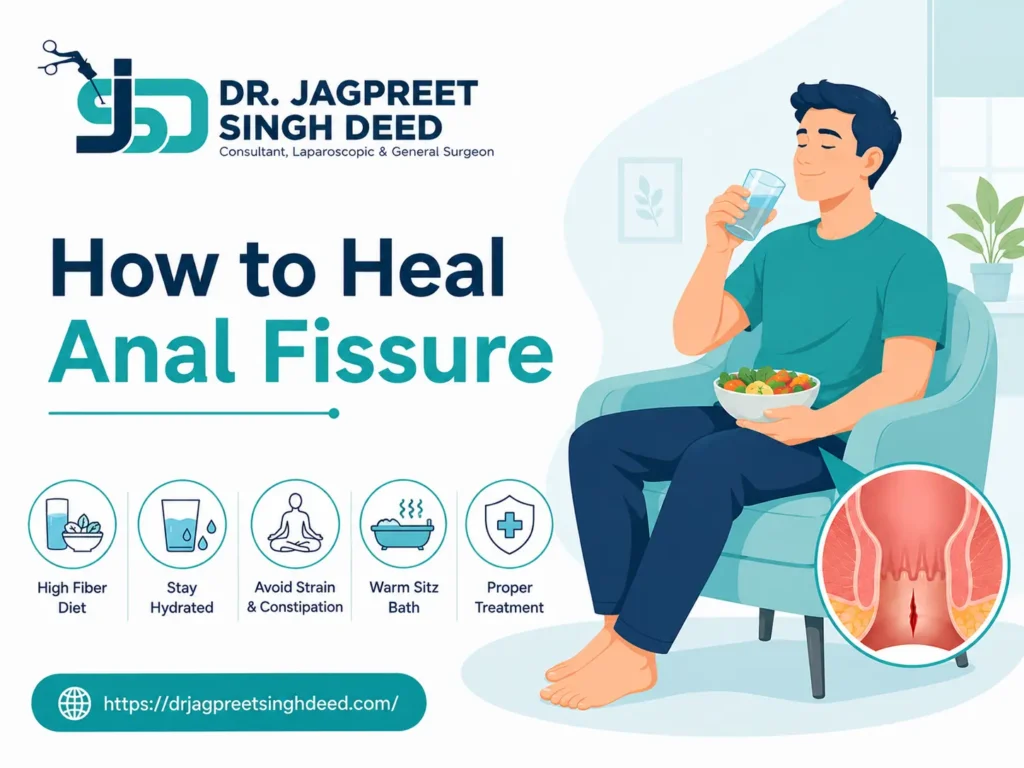
How to Heal Anal Fissure
Every trip to the bathroom has become an anxiety. The pain that hits sharp, burning, and lingers for some hours after every bowel movement.
If this sounds familiar, you’re dealing with an anal fissure. Anal fissures are among the most common conditions seen in surgical practice, yet they remain among the least discussed, simply because of where they occur.
Most fissures respond well to early treatment and lifestyle adjustments. Knowing how to heal anal fissure symptoms early can prevent the condition from becoming chronic or severe.
At Dr. Jagpreet Singh’s practice, patients receive compassionate and advanced colorectal care focused on long-term healing, symptom relief, and prevention.
What is an anal fissure?
An anal fissure is a small, painful tear in the thin tissue lining the anus. Although the tear itself may be tiny, it can cause significant discomfort because the area is highly sensitive.
Many people confuse fissures with hemorrhoids because the symptoms can overlap. However, fissures usually cause a sharp, cutting pain during bowel movements, followed by discomfort that may last for hours.
Fissures are classified as
Acute – present for fewer than six weeks | Chronic – persisting beyond six weeks |
Chronic fissures are more complex because the internal anal sphincter tightens over time, reducing blood flow to the tear and preventing natural healing.
What are the anal fissure causes in Sharjah?
Understanding anal fissure causes is important because treating the underlying trigger often helps the fissure heal faster.
- Chronic constipation and hard, difficult-to-pass stools
- Frequent loose stools or persistent diarrhea
- A diet low in fiber and fluids
- Prolonged straining during bowel movements
- Childbirth
- Inflammatory bowel conditions such as Crohn’s disease
What is the leading cause of anal fissures in the UAE?
Low dietary fiber intake and dehydration are the leading causes of anal fissures in the UAE among adults. Identifying which factor applies to you helps shape the right treatment plan.
Did you know? Chronic constipation is one of the leading anal fissure causes worldwide, especially in adults with low-fiber diets and poor hydration habits. |
What are the anal fissure symptoms that you should not ignore?
Recognizing anal fissure symptoms early may help avoid complications or chronic pain.
Common anal fissure symptoms include:
- Sharp, stinging pain during or immediately after a bowel movement
- A burning or throbbing ache that can last from minutes to several hours
- Bright red-colored blood on toilet paper or in the toilet bowl
- A visible crack or small skin tag near the anal opening
- Persistent itching or irritation around the anus
Many patients delay seeking help because they feel embarrassed discussing these symptoms. However, timely medical care can make a significant difference in recovery and comfort.
Important Note – Any rectal bleeding should be evaluated by a qualified surgeon. While anal fissure symptoms are a very common cause, bleeding can occasionally point to other conditions that deserve proper assessment. |
Will anal fissure heal on its own?
The answer depends on how early the fissure is treated and whether the underlying cause is corrected.
Acute fissures may improve with proper self-care, hydration, dietary changes, and avoiding constipation. However, chronic fissures often continue to reopen during bowel movements, making healing difficult without medical support.
So will anal fissure heal on its own, it is important to understand that persistent pain, bleeding, or recurring symptoms should never be ignored.
If symptoms last more than a few weeks, professional evaluation is recommended.
Related Blogs
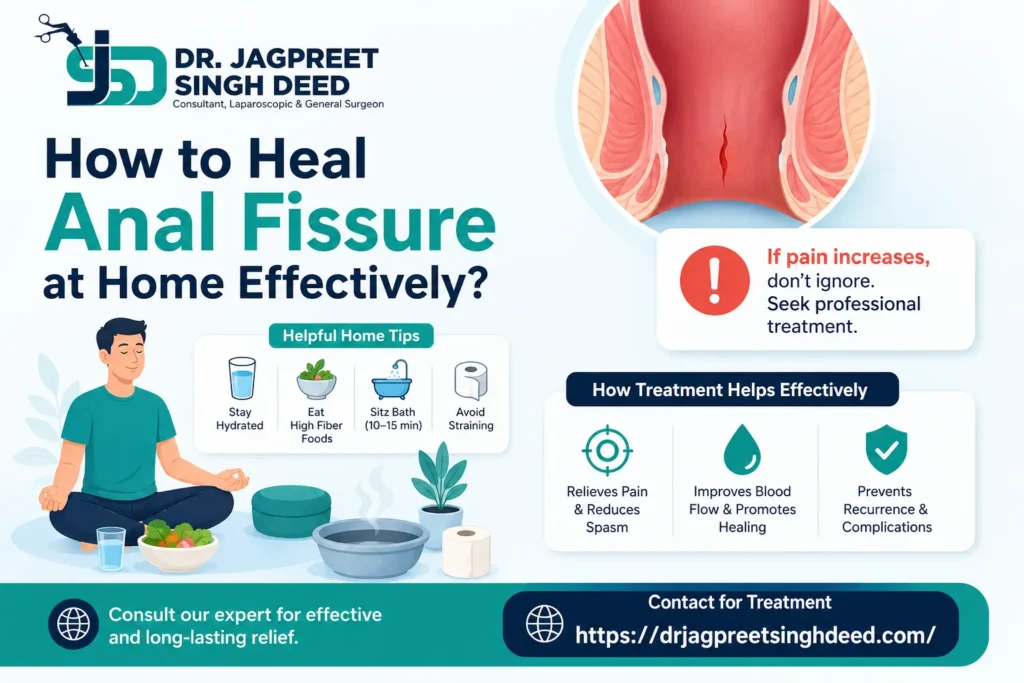
How to heal anal fissure at home effectively?
For recently developed (acute) fissures, consistent home care is often enough to resolve the problem.
When learning how to heal anal fissure, the goal is to reduce pressure on the tear, improve bowel habits, and promote healthy tissue healing.
1. Increase fiber and water intake to heal anal fissure fast
Fiber softens stool and reduces strain during bowel movements.
Aim for 25–30 grams of fiber daily through vegetables, fruits, whole grains, and legumes. Combine this with a minimum of 8–10 glasses of water per day.
Many patients trying to heal anal fissure fast benefit from gradually increasing daily fiber intake.
2. Take warm sitz baths
Sitting in warm water for 10–15 minutes several times daily may help relax the anal muscles, improve circulation, and relieve pain.
3. Avoid straining
Spending too long on the toilet or straining excessively can prevent healing. Healthy bowel habits are essential when trying to heal anal fissure symptoms effectively.
At Dr. Jagpreet Singh’s practice, treatment plans are personalized based on symptom severity, duration, and patient comfort.
Anal fissure symptoms and treatment: When to see a specialist?
When home care has not produced results after 4 to 6 weeks, it is time to seek proper medical guidance. Anal fissure symptoms and treatment go hand in hand; the right specialist will assess the severity of your fissure and tailor your treatment plan accordingly.
Prescription Topical Treatments Calcium channel blocker creams or nitroglycerin ointments relax the internal sphincter and restore blood flow to the affected tissue. These are typically the first line of medical management and work well for many patients.
Botox Injections A targeted injection of botulinum toxin into the sphincter provides temporary muscle relaxation, creating the ideal conditions for a chronic fissure to heal. It is a quick, outpatient procedure with consistently good outcomes.
When is anal fissure surgery needed?
If conservative treatment fails, anal fissure surgery may be recommended.
Many chronic fissures develop because the anal sphincter muscle remains too tight, reducing blood flow and preventing healing.
Anal Fissure Surgery: Lateral Internal Sphincterotomy (LIS) is the common surgery for anal fissures.
In LIS, a small, precise incision releases tension in the sphincter muscle, restoring blood flow and allowing the tissue to heal fully and permanently.
When performed by an experienced surgeon like Dr. Jagpreet Singh, LIS is minimally invasive, highly effective, and involves a short, manageable recovery period.
Patients with recurring fissures may also benefit from evaluation for hemorrhoids or other colorectal conditions.
FAQs
It depends on the type of fissures and its severity. Acute fissures may improve with good dietary habits whereas chronic fissures requires medical treatment for healing.
Mild fissures may heal within a few weeks, while chronic fissures can take longer and may require advanced treatment.
Incorporating fiber rich foods that include fruits, vegetables, oats, and whole grains may support healing by softening stool and reducing strain.
Modern anal fissure surgery is generally well-tolerated, and many patients experience significant relief after recovery.
Constipation, hard stools, dehydration, diarrhea, and excessive straining are among the most common anal fissure causes.
Expert anal fissure symptoms and treatment in Sharjah, UAE
Understanding your anal fissure symptoms and treatment options is important, but having a trusted, experienced specialist guide your care is what determines your outcome.
Dr. Jagpreet Singh Deed is a Specialist General and Laparoscopic Surgeon with over 23 years of experience in minimally invasive and proctological surgical care.
For patients considering anal fissure surgery, Dr. Jagpreet’s expertise in minimally invasive techniques means you can expect a careful, thorough assessment.
Whether your fissure is new or has been affecting your comfort for months, Dr. Jagpreet will assess your condition thoroughly and find the most appropriate, least invasive path forward.