
Understanding hiatal hernia
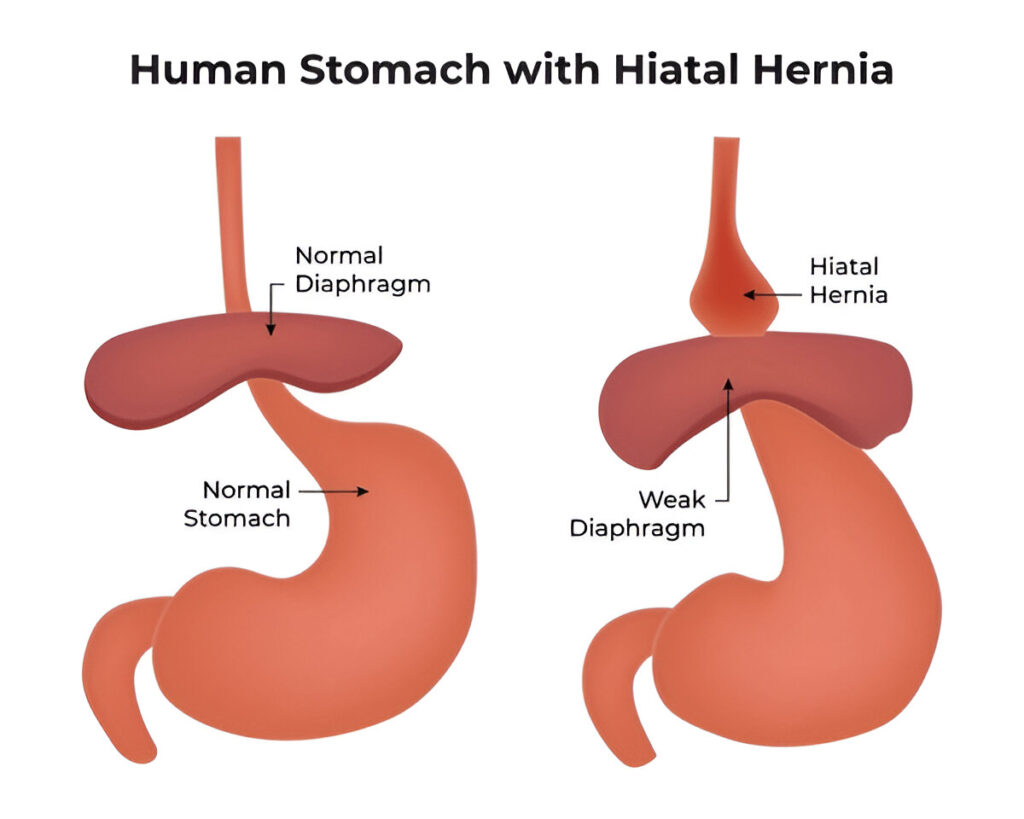
A hiatal hernia happens when a portion of the stomach protrudes through the diaphragm into the chest cavity.
The diaphragm is a muscle that separates the chest from the abdomen and plays a key role in breathing.
When the stomach bulges through the diaphragm’s opening (hiatus), it can lead to discomfort and digestive issues.
Types of hiatal hernia
- Sliding hiatal hernia— This is the most common type, in which the stomach and lower esophagus slide up into the chest when swallowing but return to their normal position afterward.
- Paraesophageal hiatal hernia – A less common but more serious type, where part of the stomach remains stuck in the chest cavity, potentially leading to complications like strangulation or obstruction.
Our treated Conditions
Hiatal hernia symptoms
Not everyone with a hiatal hernia experiences symptoms. However, when they do occur, they may include:
- Heartburn and acid reflux
- Chest pain
- Feeling of fullness quickly after eating
- Difficulty swallowing (dysphagia)
- Regurgitation of food or sour liquid
- Shortness of breath, especially after eating
- Bloating and burping
- Chest or abdominal pain
If you experience persistent discomfort, it is advisable to seek hiatal hernia treatment in Sharjah for proper diagnosis and management.
Risk factors for hiatal hernia
- Age, is more common in individuals over 50
- Chronic coughing or sneezing
- Intense exercise or heavy lifting
- Chronic obesity
- Frequent vomiting
- Straining during bowel movements
- Pregnancy and childbirth

Possible complications
If left untreated, a hiatal hernia may lead to several complications, such as:
- Gastroesophageal Reflux Disease (GERD): Frequent acid reflux and irritation of the esophagus.
- Gastritis – Trapped acid in the herniated part of your stomach may cause inflammation, stomach ulcers, and bleeding inside.
- Esophagitis: Inflammation of the esophagus resulting from prolonged acid exposure.
- Gastrointestinal obstruction – Blockage that prevents food from passing properly.
- Barrett’s esophagus – A precancerous condition resulting from long-term acid exposure.
- Ischemia – Reduced blood supply to the stomach, which can lead to tissue damage.
- Strangulation of the stomach: A rare but serious condition requiring emergency surgery
Diagnosis of hiatal hernia
Accurate diagnosis involves a combination of diagnostic tests:
- Barium swallow X-ray – A contrast dye highlights any irregularities in the esophagus and stomach.
- Upper Endoscopy (EGD) – A flexible tube with a camera is inserted through the throat to assess the esophagus and stomach.
- Esophageal manometry – is required when motility disorders like acalasia cardia are associated with hernia. Measures the muscle function and pressure in the esophagus to detect any abnormalities.
Dr. Jagpreet will recommend the most suitable test based on your symptoms and medical history.
What is treatment for hiatal hernia treatment in Sharjah, UAE
For individuals with mild to moderate symptoms, non-surgical treatments can help manage discomfort and prevent complications.
These include:
Lifestyle modifications:
- Eating smaller, more frequent meals
- Avoiding foods that trigger acid reflux (spicy, fatty, or acidic foods)
- Losing or maintaining a healthy weight
- Avoiding lying down immediately after eating
Medications:
- Antacids to neutralize stomach acid
- Proton pump inhibitors (PPIs) to heal esophageal irritation
- H2-receptor blockers to reduce acid production
Hiatal hernia surgery in Sharjah, UAE
If the hernia is large, persistent, or causes severe complications, surgery may be required to restore normal anatomy.
- Hiatal hernia repair – A surgeon reduces the hernia by repositioning the stomach into the abdomen and tightening the diaphragm opening (hiatus) to prevent recurrence.
- Nissen fundoplication – The procedure involves wrapping the upper part of the stomach around the lower esophagus and securing it with sutures to prevent acid reflux and support the stomach.
- Collis-nissen gastroplasty – Used for complex cases with shortening of esophageal length, this procedure lengthens the esophagus using stomach tissue to prevent hernia recurrence.
Hiatal hernia surgery boasts a high success rate, allowing most patients to stop medications and experience lasting relief from acid reflux.
Consult Dr. Jagpreet Singh Deed for hiatal hernia treatment in UAE
With 23+ years of experience, Dr. Jagpreet Singh Deed is a trusted general surgeon in Sharjah specializing in minimally invasive procedures. He prioritizes patient education, lifestyle management, and personalized treatment to ensure the best possible results for those dealing with hiatal hernias.

